• Journaling Fiction

    Then I am lost again, back in the thick of it and covered in mud. In the middle of the jungle, my feet stomp and squish through the overgrowth. My monkey mind panics, screaming like mad into the wild. I remain hyper-vigilant to the fact that a panther could be lurching nearby. Or perhaps an anaconda will fall from the sky and wrap me within its coils. I walk through spider webs and watch scorpions crawl up trees. I am constantly looking over my shoulder in a state of fear, shame, regret, and self-doubt. A part of me wants to go back to the safety and comfort of my home, blissfully ignorant of the truth.

    Walking into the depths of the jungle is hard, and it is not so easily tamed.  My mind tells me that I don’t belong in the jungle, that I should forget about the rose and return to civilization. At every opportunity, my nervous system defaults into a learned identity, belief system, or pattern of behavior. It takes conscious effort to first recognize these cognitive distortions and then break through my own stereotypes. These perceptions are not the reality. They are the stories that I’ve created for myself, and some of these story lines are in need of a plot twist. I have created an ego — a characterization of myself — not in alignment with my heart. I’ve written myself into a corner. In an effort to define my scope of practice, I’ve narrowed my potential. I’m stuck.

    As a physician, I sometimes feel the pressure to act and present myself in a certain way. I remember in medical school this dictum that physicians are held to a higher standard. The white coat always had to be dry-cleaned, sparkling, and wrinkle-free. I endured a constant pressure of feeling judged, both for the quality of questions that I was asking and for the questions that I wasn’t asking. Everything was examined under a microscope, and excellence was expected. After all, we walked the halls of Nobel Laureates. In such a critical environment, creativity was crushed. Individuality earned more than a raised eyebrow. My coping mechanism was to fade into the background and hope that nobody would notice that I was an imposter.

    Through the years, I’ve been able to recognize many of these cognitive distortions. I no longer own a white coat, and I’m more comfortable with the fact that I will never know all there is to know about medicine or the human body. I’m more aware of my ignorance. However, I still feel a bit trapped when it comes to self-expression and creativity. The intersection between myself as a physician and myself as an artist feels a bit like an untamed jungle. I feel like people expect physicians to write a self-help book: Smile More: Ten Ways to Make Your Life Happy, Healthier, and Wholesome. Either that, or I am destined to write a research-heavy, non-fiction hardback: Secrets of the Gut Microbiome: Everything You Need to Know If You Have Tummy Trouble. Frankly, I’m not interested in either of these forums, and I would prefer to flirt with fantasy.

    I attempted to write sci-fi, fantasy, adventure, magic, action, and romance novels. These are the stories that I enjoy reading, so it made sense that these are the stories that I should write. However, my initial drafts felt forced and over-written. They were clunky and heady, trying to logic my way through the story. My writing became a product of what I thought other people might want to read. I rigidly attempted to build a plot that was unexpected and yet made sense. Each scene became more complicated than the next, shuffling and reshuffling them together to find some sort of coherent order. I sat and stared at the same sentence for hours. I agonized over each word, so I would not inadvertently offend my audience, or worse, bore them. Despite the fact that I spent years daydreaming of the epic novel inside of me, I made no tangible progress on the page. My novel was stuck in quicksand with no way out. The inkwell was dry.

    Meanwhile, when I sit with my journal in the early morning hours, words spill out of me. Though I bemoan the fact that I am stuck creatively, I fill page after page with the gratitudes and adventures of my own life. I swing easily from thought to thought, without inhibition or worry. Most of the time, I have no plan or plot, no rhyme or reason, no character arc or scene development. I simply let the pen take control of my body, and I watch as my life transforms. I see great personal growth occur season after season. Ideas arise from seemingly no-where and appear on the page. Suddenly an idea isn’t just a half-formed thought floating through consciousness, it is a fully formed sentence, manifested in ink on the page. Themes and patterns emerge, which I can then either encourage or ignore. I become the main character in the epic story I am creating for my life.

    In this roman a clef, I continue to tell myself the story that journaling is not “serious” writing. I berate myself for not being a “real” writer. Who would want to read someone else’s journal? Surely passionate and dramatic fiction is more entertaining than my heart-felt meanderings. People read to escape the boring, hum-drum of ordinary life. Why would someone care about the hummingbird I saw on my run this morning? Or the patient who told me about their pet bunny? Or the hand-painted picture of a purple peony I found at a street fair? Journaling is only supposed to be the warm-up activity to help me do the real work. Journaling is a time for me to sit with my thoughts, reflect on my day, and figure out what’s next in my life. It is a time to play and not to worry if my words are publishable. Journaling may be sacred, but it certainly isn’t serious.

    This thought pattern continues to show up. I’m not a real writer, unless I write fiction. Yet when I try to write a serious novel full of knights in shining armor, long-lost lovers, and treasure hunts through labyrinths deep under mountains, the ink stops flowing. I stare at the blank page, overwhelmed at the prospect. The voice of my inner critic starts to fill the silence, taunting, tormenting, and torturing me. My mind echos with the cacophony of a thousand angry crows. Their sharp beaks cutting through my fragile skin, as they pick away at my bones.

    I crawl into the cave of my heart to nurse my wounds. I curl up next to the light of my soul, and I open my journal. I need to feel the soft touch of pen to page. It’s more than a necessity, it’s a desire to live. It’s the pulse of life. When I get out of my head and into my heart, words flow with unabandoned ease. My cursive script loops and caresses the page like lovers entwined. I write book after book in effortlessly fashion. The heart has poetry in it that can’t be forced the same way I can reason my way through a research paper. It holds a story far more powerful than the rules and limitations of magic. Writing from the heart is more vulnerable, more truthful, and more real. It requires an environment of nurturing, support, and quality quiet time. Instead of trying to tame the jungle, it’s time to embrace it.
  • Let me begin my story.

    Before I do so, I would like to take a moment just to connect with the breath. I draw my attention to the center of the chest, noticing its gentle raise and fall. I remind myself to write from the heart.

    Too often I let my story get carried away into the miasma of cognition. I write a line, and I turn it over a thousand different ways. I get lost in this electrical storm of neurons, as I chase each spark down its axon, through each dendrite, and across the synapse to connect with the next. I explore each branch, looking for just the right thought — just the right turn of phrase. More often than not, I find myself right back where I started.

    My story is a journey through a practiced path from getting out of my head and into my heart. Sometimes I find myself navigating down this path with purposeful effort, and other times I meander with ease and playfulness. Sometimes it is intentional, and other times it is a happy accident. Fortunately, I have had many teachers along the way to point me in the right direction. Again, sometimes these were sought out, and other times they arrived on my doorstep in the most unexpected ways.

    My teachers have previously traveled this well-worn path on their own, and they have experience guiding others along the way. Like a footpath through the forrest, the trail of previous travelers is well-recognized and self-evident. I only hope that I can guide those behind me with the same sure-footedness.

    I have many teachers from the stars in the skies to the slugs on the ground. I have learned in school buildings and libraries, ships and airplanes, museums and theaters, cathedrals and graveyards, oceans and forests. I have learned from mentors, neighbors, and strangers. While the world acts as my teacher, I am a world within myself. I too learn from myself, acting as a teacher to myself. I study my thoughts, words, actions, habits, character, and destiny.

    A primary way that I learn about myself is through the practice of writing. It helps me to slow down my thoughts, creating a logbook of memories and dreams, so I can study and shape my story. Writing is the practice of story-telling. Writing gives me the opportunity to tell my story the way that I want to. I get to empower those parts of my life that seem important and eliminate the waste.

    Another way that I practice self-study is through yoga. It is a codified system that brings darkness into light. This ancient wisdom has been distilled into practiced poetry. Yoga is more than just sitting comfortably. It brings awareness to the breath and turns the senses inward. It cultivates a heart of compassion, truthfulness, balance, loving-kindness, and generosity. Through committed action and self acceptance, the consciousness is transformed to pure awareness.

    My patients are my ultimate teachers. As a physician, I sit across from a version of myself everyday. I study the science of the human body, and I try to restore homeostasis to a person. Whether that be through pills or patience, I watch other humans transition through different developmental stages in life and transform through its challenges. I see a bit of myself in each person. When I treat a person who is depressed, I have to face my own sadness and isolation. When I examine someone with a fever, I am reminded that I too have been sick. It takes practice to develop empathy without being consumed by it. It is a constant battle of letting go of attachments and facing the suffering that most people wish to avoid.

  • As my bones settle

    As my bones settle into the evening

    Surrounded by books and poetry

    Oh, let me dream

    Simply for the joy of dreaming

    Passing the night away in beautiful memories

    Piecing themselves together like a puzzle

    One by one they click into place

    Forming a life that stretches beyond the edges of eternity

    Children waving at a passing train

    Raspberry cupcakes and black coffee

    Brightly colored balloons that polka-dot the sky

    As my bones settle

  • Totality

    For the past several years, through the grind of medical school, residency and now physicianship, I thrived off of solar energy. I prided myself on being a sunflower, showing people only the best parts of me. I followed the sun through the sky, trying to soak up every minute of daylight. I drank espressos and ran through cotton fields in the middle of blistering summer afternoons. I liked the fire burning hot and fast.

    Despite my love affair with fire, it still burns when I touch it. I find myself crispy around the edges at work. Compassion fatigue has started to creep in by the end of the day. I notice an angst and irritability when I’m around others. Honestly, my mind feels a bit manic and frantic, constantly moving from one thing to the next. I have hot flashes at night and dreams turn into nightmares. I suffer from migraines and my right knee hurts every time I run. Worst of all, regardless of how hard I try to move the wheels of this vile machine, I find myself inconceivably — and incontestably — stuck.

    Therefore, in order to move forward with my story, I must move backwards. Memories provide meaning for the future. The things I learned yesterday inform my experiences today, which is a day I’ve never seen. The possibility of tomorrow guides my current actions. I set my sights on a vision of the future, and one step at a time, I move out of the past and into the present. This timeless connection allows my story to unfold in a series of reflections. As Tristram says, “in a word, my work is digressive, and it is progressive too,—and at the same time.”

    While my body in its current form has no direct recollection of the beginning of time, I suspect a subtle part of my collective conscious has a connection to that cosmic energy. I imagine the Big Bang as a serendipitous moment — a tiny sub-atomic spark that continues to ripple across the universe like lightening in slow motion. In that infinite energy field, sometimes, life happens. I exist somewhere suspended in that static electricity, bound to a magnetic marble floating through space. Time is an illusion created by fools.

    In the beginning was the Void —

    Vast, endless, and uncharged,

    In perfect balance and harmony,

    Lifeless

    What was that moment like?

    The moment space decided to move

    And stars began to sparkle

    Creation

    More recent than the beginning of time, yet far before primitive technology, an ancient version of myself walks through a forest on a beautiful sunlit afternoon in spring. I’m foraging berries, herbs, and mushrooms when suddenly the skies darken. A coolness sweeps over me, and I wish I had brought my cape. I look to the sky, and through the leaves, I see a black mass surrounded by a radiant ring. It’s like nothing I have ever seen. I have no memories to explain my current experience. No framework on which to stand. My mind cannot perceive what it is seeing, so it tries to fill in the blind spot. The sun has become a black hole.

    I see doom first. Panic grips me. A part of my animal brain screams. Something deeply subconscious, instinctual and wild, let’s go. The cawing and cackling of the birds are maddening. A rabbit chases a fox away.

    Confusion comes next. Seconds pass as if an eternity. My mind glitches. It has severed itself from my body, as I stare in awe of the glowing black mass. If the sun no longer exists, then surely I no longer exist either. I have known the sun for as long as I have know myself.

    A magician must have cast a spell to steal the sun, playing a trick on the forest. I wonder if I ate a mushroom with mysteries properties. I must have fallen asleep, and this is all a dream. Indeed, this can’t be realty but merely an illusion.

    Yet, curiosity builds. I’m definitely awake. In fact, I’m still breathing too. I must still be alive, and the sun must still be in the sky. I can see it sparkle behind the hole. It is as if it is hiding behind an orb. Not a hole, but an orb. The orb takes its time, letting its shadow linger over me for several minutes.

    Slowly, ever so gently, it moves forward to the time after. Then quite suddenly, I experience a moment of awakening. A veil lifts, and I can see again. My mind fills in the blind spot with an image of the moon. It’s the only other circle in the sky large enough to block out the sun.

    Sun, Earth, and Moon dance through the cosmic clouds of space and time. The Sun Sister radiates warmth and light, inviting transformation through the seasons. The Moon Sister reflects change, influencing the ebb and flow of tides. The Earth Sister nurtures the abundance of life, providing the nutrient-rich chyme needed for birth, growth, and decay. The whirling energy of the Three Sisters — dazzling Sun, radiant Moon, and darling Earth — creates the balance needed to sustain life.

    The sun isn’t moving, rather I’m spinning. I’m also circling the sun while the moon circles me. Meanwhile, all these other planetary marbles are circling the sun with their own little moons circling them. Though my mind accepts cosmic energy extends beyond my little solar system, it starts to get fuzzy around the edges. It disappears into the void.

    I think back to the last several days. In a slow flow across the sky, the moon reveals phases of itself throughout the month. The moon was getting progressively smaller, rising in the early morning hours, and preparing to disappear from the sky for a few nights before beginning its cycle anew again. The next time I expected to see the moon, it would be a small sliver in the evening sky. However, in a fleeting moment of alignment between the three Sisters, I had witnessed the moment of transformation, as the moon shifted from digression to progression. In order to see the dark side of the moon, it had to hide the brightness of the sun. It’s shadow became its power.

    Today is the total solar eclipse super moon in Aries. It is a powerful day for extra-planetary forces, and I plan to use this energy to step into my own power. I breathe because of this cosmic energy in motion. Each inhale and exhale is an exchange of energy with the universe itself. I am powerless to change the face of the moon or the path of the sun, and yet I exist. The power of the universe exists within me because I am made from it.

    I am an embodiment of nature.

    I am that.

    Earth, Moon, and Sun.

    I am all of that.

    Totality.

    I stare at my own shadow, contemplating my relationship with the moon. Different aspects are for different days, yet it’s always the same moon. I too can create a different rhythm for my life. I tell Bear about my revelation, “I feel a transformation rising. I feel this cosmic energy building. It’s a power that is radiating across the solar system.”

    “I can hear this hum,” he says.

    “That’s the sound of these huge stones rolling past each other in space,” I say.

    “I thought it was just my tinnitus.” Bear rubs his ear, opening and closing his jaw a few times.

    “I plan to use this super charged energy to power my will to love and to light.”

    “What does that mean?”

    “I’m not quite sure yet, but it’s going to be big.” I expand my hands out in front of me, flashing him my palms with a flourish to emphasize just how big it’s going to be.

    Bear lets out a yawn. “How about we start by going on vacation?”

    “I like that idea much better. Where do you want to go?” I ask him.

    “Let’s go to the mountains.” Bear says.

    “Let’s go to the ocean.” I say.

  • The Night Ravena Comes to Visit

    When we get home, I retreat to my room. My mind is buzzing. It craves a cool, quiet, dark space. I take my hat off and call to Prim. Nothing happens.

    I call again a little louder, “Prim?” The sound echos into the hat. Prim, prim, prim…

    I tentatively reach my hand into the hat. It disappears into the darkness, finding nothing but air. I reach a little farther and a littler farther until the brim of the hat is up to my axilla. I wave my arm around in every direction, trying to find the edges. Emptiness.

    When I’m about to give up, my hand brushes against something metallic. I grasp my fingers around a cold, rigid rod. When I pull it out of the hat, I examine it under the light. It’s the pen that Thomas left at the Cosmic Cafe. It twirls between the fingers, almost of its own accord. I tentatively uncap the pen, revealing a silvery nib shimmering with ink.

    I pull out my journal, opening to the next blank page. Guilt chokes me. My last entry was dated over 10 days ago. Time slips through my fingers like water through a sieve. Though I’m tired and my head hurts, writers must write.

    My inner critic sits front row center tonight, scoffing at every line. Ravena looks at me with obsidian eyes. She lets out a cackle that sound like bones splintering. “You have no plot.”

    “I have a plot.”

    “Prove it,” she mocks.

    “I have a plot, but if I tell you now then that will spoil the story.”

    “Humor me.”

    “You tire me, Ravena. All in due time, you’re being impatient.”

    “Sure, sure, can you just remind me where we left off? I seem to have forgotten.”

    “We are at the part where we are introducing the main character. In this case, it’s a magician named Thomas. He finds an injured rabbit and hides her away in his hat.”

    “Forgive me, I’m just waiting for the part where something interesting happen.”

    “Life doesn’t have to be so dramatic. Sometimes it can just be playful with a lot of little joys.”

    Ravena throws her head back and starts coughing. She opens her beak wide, exposing her gullet. She regurgitates a worm. “No one wants to read that. It’s boring.”

    “That’s too bad because that’s my story. It’s a cozy novel about a magician with little worries.”

    “Magic by any other name would be just as delusional.”

    “The world could always use a little more magic. Now if you’ll excuse me, I’d like to continue on with my writing.”

    “Yes, of course. Please proceed.” She yawns and pretends to look away, preening her feathers.

    “Thank you,” I say. The pen hovers over the page, as I contemplate my next words. I search and search my mind for a thread of inspiration, and yet it is completely blank. I grip the pen so tight that a drop of ink falls onto the page, creating a growing smudge on an otherwise empty page. Like a black hole, my hopes and dreams of being a writer gets sucked into it.

    Ravena looks at the splash of ink and cackles again. “Just as I suspected. Blot, no plot! Blot, no plot!” She caws.

    “Are you going to do this all night?” I say, slamming my pen down, splattering more ink stains across the page. Bitterness and anger boils beneath my skin. I feel my eyes growing hot with tears. I know she’s right, but I’ll be damned to admit it.

    “I’ll stop when you write better. Blot, no plot! Blot, no plot!”

    “That’s it. Go! Get out of here!” I stand up and wave my hands towards the bird, scooting her towards the window. She hops across the table, puffing up her feathers and screeching in protest. I eventually force her out the window and slam it shut, making the glass rattle in its frame.

    Slumping back in my chair, I let out of huff. With renewed determination I again set pen to page. Though my cursive scrawls and scratches across the paper, Ravena continues to taunt me from outside. Try as I might to ignore her, the incessant rapping of her beak against the windowpane drives me to near madness. I pretend I don’t notice her, and I press on, trudging my way down the page, line by line, for better or worse. I obsess over every word, trying to find the right rhythm, tone, and lyric. If memoirs are songs of the heart, then this one feels off beat and out of tune.

    Eventually, the words stop. I cap my pen, close the notebook, and head to bed. Writing will be better tomorrow, I tell myself. Tomorrow is a new day. One that I’ve never seen before.

    When I finally drift off to sleep, I dream of water — violent, intense dreams of the ocean. I witness a tsunami. I stand on the shoreline, and I see the wave coming from a distance. I run to the nearest building and climb to the roof. I watch others do the same, heading for higher ground. A few remain on the beach, preparing to surf the giant wave, apparently unafraid. It feels as if I’m not the only person having this dream tonight. It is as if everyone I see in my dream are other people asleep in their own beds, yet we all got pulled into the same current. The water raises higher and higher. It reaches the roof, and I have no place to go. I’m terrified, and all I can think to do is yell for help.

    I wake up to the sound of me trying to scream, paralyzed to the bed. I am drenched in sweat. My heart rumbles and booms. I feel it pounding in my head. Lights flash in front my eyes, and spasms shoot down my neck. The pain makes me nauseous. I get out of bed and stumble to the kitchen for some seltzer and aspirin. It’s another night of thunderstorms and migraines.

  • Tacos Locos

    After my run, Bear and I go to Tacos Locos to celebrate the end of a Tuesday. While we wait in line to order, I massage my temples and neck. As my husband and a fellow physician, Bear takes immediate notice, “You have another headache?”

    “Yeah, it’s not quite pounding but definitely a dull ache. I’m hoping some food will help.”

    “Did you overdo it on your run again?”

    “Maybe,” I hedge, “but the day turned out to be beautiful.” We both know that he’s right, but running keeps me sane. If I run myself to the point of exhaustion, then I’m too tired to think about the darkness that lurks behind the veil.

    “It’s pretty hot out there,” he counters.

    “I know, I know. I just felt cooped up all day.”

    We approach the food truck, which gives me a welcomed excuse to end the conversation there. I order the same thing I do every Tuesday: fish tacos with a side of chips and queso.

    When we settle ourselves on a red picnic bench, I ask Bear, “what was the best part of your day?”

    He answers without even having to think about it, “that it’s over.”

    “I don’t disagree with you. It wasn’t a bad day, but it felt particularly long.”

    “Why’s that?”

    “I don’t know. People, I guess.”

    “I hear you,” Bear agrees. It helps that he is a physician too. He doesn’t need an explanation on how patients can both fill up my cup and completely drain it.

    I take a moment trying to reflect on something positive that happened today. Given Prim’s adventure at Cosmic Cafe earlier, I’m not sure now is the best place to make introductions. Instead I say, “my boss offered me a job promotion,” though it comes out more as a question.

    “Oh, yeah?”

    “Well, more like a promise of a potential promotion, but I don’t think I want it.”

    “Why not?”

    “It sounds like more work. Less patient care, but more admin time.”

    “Does it come with a pay raise?”

    “It would, but I don’t know if it’s worth it. I feel like I already give so much energy to that place, do I really want to give it more?”

    “Work will always ask for more.”

    “That’s the problem. Why can’t what I’m doing now be good enough? I just want to show up, do my job, and go home.”

    “So what did you tell them?”

    “‘Thank you for the opportunity, and I’ll think about it.’ What else was I supposed to say?”

    “You could just say, ‘no.’” Bear makes it seem so simple. I envy his confidence.

    “If I put my head down, work a little harder for a little longer, then maybe I can pay off my medical school debt sooner. The sooner debts are paid, the sooner I can get out.”

    “If that’s what you really want.”

    “What I want is to quit and write a novel. I want to capture the imagination of generations, sell my book, and make $2.5 million in royalty. I want to become royalty and never work again.”

    “So why don’t you?”

    “Money.” I say, taking a bite of my taco. “Medicine pays the bills. I still have student loans.” Bear and I masticate on this thought for a while. We both owe a mountain of debt to medicine, and I must serve my time. While it’s not a life sentence, it’s a good 10-15 years without parole.

    It’s a tough bite to swallow, but I eventually say, “Ultimately, it’s just the training that I would need for the promotion, so I haven’t promised anything yet. It doesn’t hurt to leave the door open.”

    “I agree, it’s good to have options. But remember to set your boundary too. You tend to be a people-pleaser and avoid confrontation,” he says. His words sting because I know they’re true, so I do what I do best and change the subject.

    “I’m well aware. I can’t even write about confrontation.”

    “What do you mean?” he asks.

    “Conflict makes me so uncomfortable that it’s hard for me to even imagine it. I avoid thinking about it because what if it comes true?”

    “That doesn’t make sense.”

    “You know the quote: thoughts become words, words become actions, actions become habits, habits become your character, which becomes your destiny. Well, I find it hard to think about all the bad things that my characters could do in order to make an interesting story. What if by writing about these things I somehow become bad myself?

    “Then be bad. But that doesn’t even matter because this is make-believe. You can write whatever you want that doesn’t make it true.”

    “I know,” I say pointing a chip at him. “Just like I know scary movies aren’t real, but that doesn’t make them less scary. I’m a highly sensitive human that is prone to suggestibilities.”

    “Yes you are, and right now you’re being dramatic.”

    I shove the chip in my mouth. “Regardless, I’m completely blocked. It’s hard to write a story without a conflict.”

    “Well, what do you want to write about?” Bear asks a seemingly straight forward question for a writer, and yet it makes me feel caught like a mouse chasing after cheese. I drizzle some queso onto my next bite of taco, thinking it over.

    “I’m reading Sy Montgomery’s Of Time and Turtles right now.” I finally say. “It’s a lovely memoir with a simple storyline, heartfelt themes, and wisdom woven throughout. Turtles may seem unexciting, but they can actually be quite dramatic! I see the same writer in her that I see in me.”

    The answer surprises me, and also feels right. Memoirs are my mother tongue. They are the type of stories that I saw my Grandmother write at her kitchen table. I, too, tend to do my best writing at the table, with the movement of love and family circling around me. Writing is the thing that has always brought me healing, clarity, and insight. Memoirs also evoke a quality of humanness. It creates a container for a more subtle, spiritual connection between writer and reader.

    “I envy the fictionists though and their ability to evoke imagery, suspense, and adventure,” I say. “I want to write stories about castles in the sky, painted dragons, and epic romances between star-crossed lovers. Magic. Adventure. This is the stuff that I like to read, but my pen doesn’t like to write it.”

    “Why not?” Bear asks.

    “My pen is more mundane than that. The stories that flow are musings and meanderings of my every day life. They are pennies from heaven — unexpected surprises you find along the way. While many may pass over them, judging them as unworthy of their time and attention, I chose to pick them up, admire them and place them in my savings for future use.”

    “The way to make $2.5 million is one penny at a time,” Bear says.

    “Exactly! I find richness in the small things. My story may not be as thrilling as a war between goblins and warlocks or as passionate as fairy smut, but my life feels like an epic adventure. The future is a complete mystery. Every moment that passes me by is a surprise as to what comes next.”

    “So when are you going to finish this masterpiece?”

    “At this rate, it’ll likely be post-mortem. When I am at work, I barely have the energy to get through the day,” I explain to Bear. “I am burned out, getting crispier at the edges every day. I don’t know if it’s the cause or consequence of feeling stuck, but I don’t have the energy to write.”

    “Look I get it man,” he says. “I used to carry a sketchbook with me everywhere I went for years. Lately, my body battery is empty.”

    “My body battery says system error.”

    We finish up our tacos, allowing the conversation to drift to lighter topics. On our way home, I rub my temples again. While eating helped, I still have a band of pressure that wraps around my head. If I move too suddenly, it became a sharp knife through the eye. I’ll be grateful to take my hat off soon.

  • Congruency

    Progress is moving backwards in a different

    — direction

    Coming out is inviting in

    Welcome to my Inner Space

    where Play is the counterculture

    Lay down in the shadows with me

    Stay and linger in a story of delusion

    Become intimate with the foolish troupe

    Immersed in the magic of possibilities

    Joy is a bold celebration of creation

    Live openly, reflect kindness

    Fairy fiction is my Queerdom

    Through the characterization of narration

    A subject under study is bound to change

    a gay plague steps into a prism of light

    Destroy secrecy, master sorcery

    Individuation is transformation

    Through allyship and expression

    I am not the same

    today as yesterday or tomorrow

    To define me is to kill me

    I will not be confined

    Because I am divine

    queerness transcends polarity

    Connect with me and undo the dualism

    break through the binary

    one becomes all

    Pansy craze and liberation

    Grow with me, and I’ll show you my flowers

    Wilt and see my roots, vectors of power

    Explore my branches, flex and bounce in the wind

    Deconstruct my leaves, and find the forest within

    Scatter me across the Wild Earth, and build it back better

    Loosely hold the myth of gender river

    Let the streams converge

    Align my body with its ever flow

    Wash my spirit smooth as stone

    Give back the shame that is not my own

    Flood the dam of forced vulnerability

    Anoint the child within the beast

    With a flower crown of holy waters

    Misty Mountains until noon

    Un-name the wind and hear it too

    Affirm human rights

    Inviting-In over and over and over again

    Invade my mind with lovelies

    Living queer is resistance

    Reclaim rest and recycle sexuality

    Embrace fluidity as a sensual reality

    Life is always happening

  • Run Away, Run Away!

    I finish up notes from the day. Sixteen little stories, some better written and more thoughtful than others. I stare at the unfinished tasks in my baskets. It’s a number that will only get bigger tomorrow, but tomorrow is another day.

    When I remove the stethoscope that’s been hanging around my neck, it’s as if I removed a lead chain. My shoulders feel lighter, and I can breath again. I change out of clinic clothes and into my workout clothes. My body finally feels free to move. 

    I take Prim out of my hat. “I know it’s been a long day,” I say to Prim, “but I need to go for a run. Do you want to stay here and rest?” 

    She stares at me unblinking. Her dark eyes glossy and penetrating.

    “Look, I’m feeling a bit restless. I just sat here in the same office for the last 10 hours, lecturing people on the importance of exercise. I don’t want to go, but I have to go.”

    She turns and looks at the hat, then back at me. Her ears hang low against her back. She moves towards the hat, favoring one leg as she does so. She stops and looks at me again.

    “If your leg hurts, you probably should stay and rest.”

    She defiantly turns away and hops inside the hat, disappearing into the darkness. 

    I pick up the hat and replace it on my head, cinching it down a little tighter. “If you insist,” I say.

    When I step out of my windowless box, the sky overwhelms me. I forgot how big it is. It takes a moment for my eyes to adjust to the sunlight. I blink hard a few times as tears form. It feels a bit surreal. While I was trapped in a cage of fluorescents, the blue sky was there all along. What is this world? 

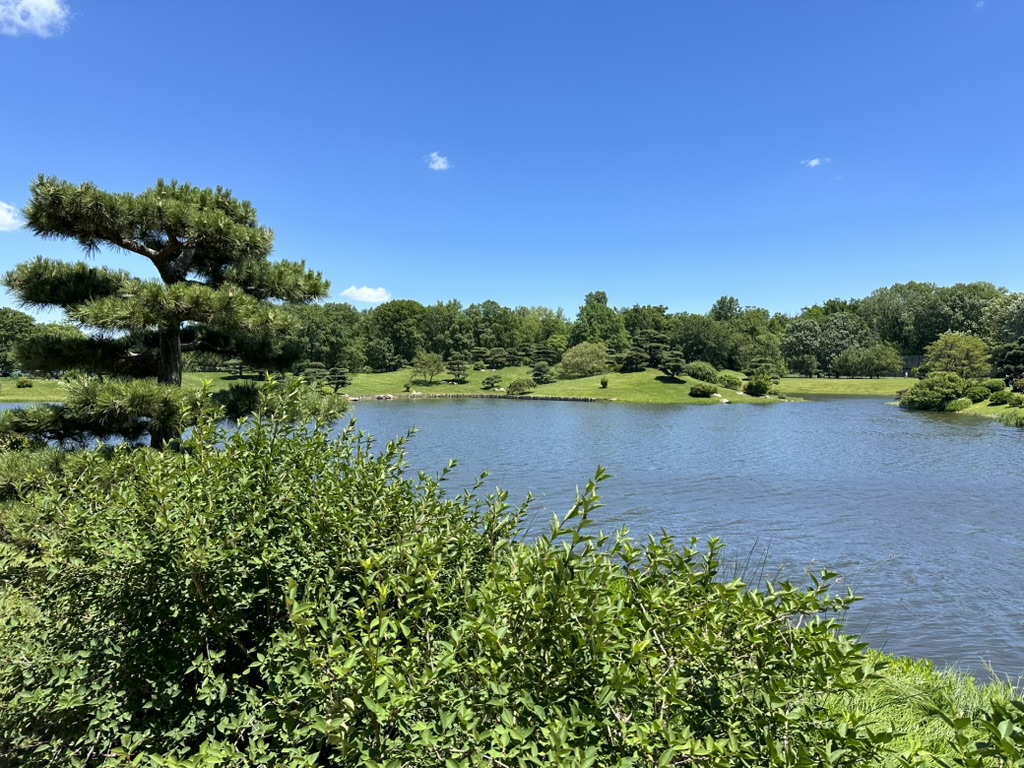
    I set out for a jog in Johnson Park, following a trail that wraps itself around a lake. It’s not so much a lake as a manmade reservoir. A few decades ago, this land was a treeless airport with tarmac, watch towers, and hangers. Now, it’s a repurposed suburban greenway. Though the city planners did a beautiful job, the whole park is artificial. Even the geese are imported from Egypt. 

    My legs to fall into an easy rhythm. It’s a path that I’ve ran a thousand times, and my body knows the way. As I pound my feet into the concrete, I try to let go of my day. I think of my patients and their suffering. I think about the ways the system fails them — the way I fail them. I think of all the trauma I witness, and the fact that I’ll wake up tomorrow to witness more. If only I could run faster, then maybe I could run away from it once and for all.

    Despite last night’s storm, the sun is blazing this afternoon. It dried up most of the puddles, which has left the air thick and muggy. With a rabbit in my hat, my head starts to feel especially hot. Sweat soaks through my shirt, sticking to my skin. My watch buzzes. I receive a warning that my heart rate is in the orange zone. Since I’m not in the red, I ignore it and keep pushing.

    I run pass a man sitting at the water’s edge on some boulders. Even though my body is still running, my mind suddenly glitches. It’s as if I can experience that moment through him. He smells the fishy pond water, and he feels the cool smooth stone beneath him. He’s watches a turtle float in the water, whispering to it. The noise in my head suddenly becomes quiet and still. In that space, a question forms: what do you desire? 

    I wince. A sharp pain shoots through my right eye. Twinkling lights start to flash across my vision, and I feel a familiar ache start to build in my head. It’s best not to meddle in other people’s minds, and right now all I desire is some water. I crack my neck and press on with my run. Only a few more miles to go.

  • Yes, and…

    In the afternoon, I have a scheduled meeting with my boss, Ai. It’s another virtual meeting, so I’ll be tied to my screen, sitting in my windowless office, which has started to feel more and more like a box. I’m in a box talking to a screen with another person in box talking to a screen. We both suspend disbelief that it is normal to talk to inanimate objects.

    Ai starts by telling me that I’ve been doing a wonderful job. Patient reviews look great. I’m consistently meeting my quotas, and in fact I’m actually in the top percentiles for efficiency.

    “It’s been a heavy workload, and I feel overwhelmed at times.” I tell him.

    “Have you been using the Ai button? It can write messages for you, report out labs, and even scribe the encounter note.”

    “I suppose I could give it another try…” I let my voice trail. In fact, I had used it for a couple weeks, and I found that it left me feeling icky. I wasn’t sure how my boss would respond to the technical term, “icky,” so I stop myself. Instead, I said, “I found that it made a few errors. After the visit, I noticed that it would scribe something that the patient didn’t say.”

    “Did you use the thumbs down button? It’s supposed to learn from you.”

    “Yeah, and it took longer for me to edit the note than to just write it right the first time.”

    “The code is updated regularly, so hopefully that will help.”

    “I’m also concerned about all the ethical considerations of using artificial intelligence. What about patient consent? Many of my patients wouldn’t want the confessions of their private lives recorded. I also have concerns that we’re losing touch with our patients. Sometimes the only therapeutic remedy I have to offer are words of compassion. If I give that privilege up to a computer, then I wonder what that says about us.”

    “I’m sorry, it looks like there is a delay in our video, and your audio cut out for a little bit. Can you repeat?”

    “Oh, sure. I just said that it’s a privilege to use a computer.” I lost energy to argue further.

    “Excellent. Now that we’ve got that solved. I’ve been meaning to ask you if you’d be interested in applying for a leadership summit. Now, it doesn’t commit you to anything, but it would give you the training you needed to be a medical director.”

    Recently Ai has been encouraging me to apply for a promotion. The position would be the next logical step in the hierarchy of the medical profession. In addition to my current duties of providing direct patient care, I would take on the responsibility of managing my peers’ performance, training new hires, formalizing feedback, attend daily leadership meetings over lunch, and pacifying the disgruntled patients of my colleagues. Ai explains to me that I am already doing many aspects of the job already, which is why I am a prime candidate.

    “Oh, that sounds…” My mind races to fill in the blank: exhausting, awful, stressful. Today, I listened to over a dozen people tell me their biggest complaints. I was caught in a web of lies between two bickering ex-boyfriends. I said goodbye to a patient pursuing hospice. I looked at one man’s hemorrhoids and then swabbed his throat for strep. I diagnosed someone with hypertension, which lead to a long conversation about stress and insomnia. I do this job because I have to believe that I am making a positive impact on my community, even on the days that I have a hard time seeing it. I give and give and give. “Exciting,” I finally say.

    “Yes! I knew you would be up for it.” Ai says. “I’ll send you an e-mail with the details later this afternoon.”

    “Sounds good. Thank you.” I smile and raise my voice to try to sound cheerful. I think I get away with it, but I can hear the tone of inauthenticity in my voice. I shall not tell lies.

    “Oh, and one more thing, the powers above me said that they’re trialing this exciting new initiative to help expand patient access. To do this, physicians will work an additional weekend each month. Plus, you even get to choose which weekend you want to work, so be on the lookout for the sign up sheets. I’ll talk to you next month. Bye for now.” Just like that, Ai’s box disappears from my screen, and I’m left staring at myself.

    Once again, I stand at a crossroads of what is expected of me and what I desire. Perhaps it would be easiest to accept the promotion, work the extra shift, and play the part. I am sure I would grow from the experience, and Ai thinks I would be good at it. Though somewhere in the back of my mind, I hear a quiet voice ask, Can I say no?

  • Morning Routines

    When I get back to the clinic to start my afternoon, I slump into my chair. I criss-cross my legs one way and then the other. I shift my hips this way and that, tossing and sloshing frustration. Slowly and persistently, I wear through the afternoon. It’s a blur of appointments, prescriptions, lab work, and messages.

    Finally, my last patient of the day arrives. She’s 30, healthy, and here for a wellness visit. It should be an easy visit. We talk casually about nutrition, physical activity, and sleep. This part of the conversation goes mainly as expected.

    In the seat of the physician, energy exchange tends to be one directional. I ask probing, personal, and intentional questions to hopefully motivate the patient into finding the answer to their own problem. They ask me questions about medicine, science, and the research, seeking objective evidence to fill in their knowledge gaps. Occasionally, a patient will throw a personal question back at me.

    As I conduct my exam, she asks me an unanticipated question, “do you have a morning routine?” I take my otoscope out of her ear, lean against the countertop in front of the exam table, and look at her for a moment. I consider my answer.

    The honest answer right now is “no.” While I have had seasons where I exercise, journal, or mediate in the morning, I’m not currently doing any of those things. As I consider her question further though, I realize the brutally honest answer is ”yes.” 

    I wake up every morning, and I fight my alarm. I try to force myself back to sleep. Oh no, not again, oh god no. Maybe if I fall back asleep then today won’t really happen. I eventually — begrudgingly — drag my body out of bed and into the bathroom to splash water on my face and try to tame my scruff. I rush through some chores, throw on scrubs, and spill my coffee as I run out the door on the way to work. It’s a total tragedy, until I log onto the screen at 7:58am and put on my showtime face. 

    It didn’t always used to be this way, and I certainly understand the importance of a morning routine. Julia Cameron introduced me to morning pages in The Artist Way, which was truly transformative. For years, I practiced rising early to write a few pages before my day got started. It was a quiet time of contemplation and introspection. It was some of the best work I accomplished, and I felt grounded and clear-headed the rest of the day. The practice of a regular writing routine produced prolific creativity. 

    Just as the planet Venus follows a predictable pattern through the night sky, an artist must cultivate a routine. The Goddess of Art and Beauty is generous to those who show up to the page to receive her gifts. Inspired writing only happens if I’m writing. 

    Morning pages was a good routine, until it wasn’t. It was good until it became dogmatic. Guilt sat heavy on my chest if a skipped a day, so I kept pushing ink onto the page. My hand cramped as it gripped the pen. Cursive became scribbles. I scratched out every other word because my hand couldn’t spell as fast as my mind. Then I scratched out my attempt to correct the spelling because I misspelled it again. My words lost meaning, purpose, and direction. Instead of a meditation, it became a race against the clock. Another task to check of my growing list of things to do for the day. 

    Now I rush, rush, rush through my morning. I drag my caffeine-fueled, adrenaline-filled body through the day, until I can get home to collapse on the couch, moving from screen to screen to screen. Tomorrow, I tell myself, tomorrow will be the day that I become the writer I’m supposed to be.

    Instead of a confessional, I deflect, “oh yes, the early morning hours are thought to be sacred. Why do you ask?” My evasion goes unnoticed.